pregnancy period
AddThis Social Bookmark Button
  pregnancy icons
pregnancy pregnancy symptom pregnancy period
pregnancy period pregnancy Getting Pregnant Pregnancy Symptom Pregnancy Tests Pregnancy Types Pregnancy Stages Pregnancy Nutrition Pregnancy Exercises Maternity Clothes Labour and delivery Baby Shower After Pregnancy Childcare Pregnancy Complications
  Pregnancy Problems
  Pregnancy risk
  Pregnancy Complication
  Pregnancy Complication
  Nausea During Pregnancy
  Pregnancy Morning Sickness
  Morning Sickness Relief
  False Pregnancy
  Pregnancy Spotting
  Pregnancy High Blood Pressure
  Heartburn Pregnancy
  Miscarriage Pregnancy
  Termination of Pregnancy
  Pregnancy and Depression
  Pregnancy Constipation
  Cause of Stretch Marks
  Stretch Mark Treatment
  Stretch Mark Removal
  Home Remedy for Stretch Marks
  Laser Treatment for Stretch Marks
  Lotion for Pregnancy Stretch Marks
  Stretch Marks Breast
  Birth Defects
  Breech Birth
  Partial Birth Abortion
  Pregnancy And Asthma
  Premature Birth

Get Free Pregnancy Tips In Your Email

Vaginal Pregnancy Spotting

Pregnancy spotting or bleeding during very early pregnancy is quite normal, and may not indicate anything to be worried about at all. As early as 7 to 9 days into your pregnancy, you may observe some vaginal spotting, which is due to the process of embryo implantation onto your uterine walls. Such spotting and bleeding is very minor. If you observe any spotting or bleeding that cause you alarm, consult with your doctor immediately.

It may be possible that pregnancy spotting is no cause for alarm, but, alternately, it could be a sign of some problem that could turn out to be serious. You will probably need to undergo an examination to ensure that both, you and your baby are fine, and there are no complications expected. If for some reason, on observing heavy bleeding, you are unable to get in touch with your doctor, do not waste time - get to some emergency clinic, and fast.

Things To Know

Some times, it is not possible to determine what caused that prenatal pregnancy spotting or bleeding. Spotting is normally a very light form of bleeding, something like what you may have observed at the beginning or the end of your normal menstruation. It is possible to spot some blood as the blood supply to your cervix and pelvis has increased. Of course, the spotting varies in color, from pink to red to brown - similar to that of dried blood.

Let us look at what can cause this vaginal spotting or bleeding during pregnancy:

  • Bleeding During Implantation - You may notice slight vaginal pregnancy spotting for a couple of days very early in your pregnancy. This is about the time your fertilized egg implants itself on the walls of your uterus. This is so early in your pregnancy - about 6 to 7 days after fertilization - that you, probably, are not yet even aware that you are pregnant.

  • Ectopic Pregnancy – Spotting or bleeding could also be a sign of ectopic pregnancy - implantation and subsequent development of a fertilized egg outside the uterus, as in a fallopian tube - or an early sign of miscarriage. In such a case, spotting is accompanied by abdominal pains and cramping. Another rare condition – known as Molar pregnancy – in which abnormalities in your fertilized egg make it impossible for the embryo to develop or survive, also cause bleeding. 

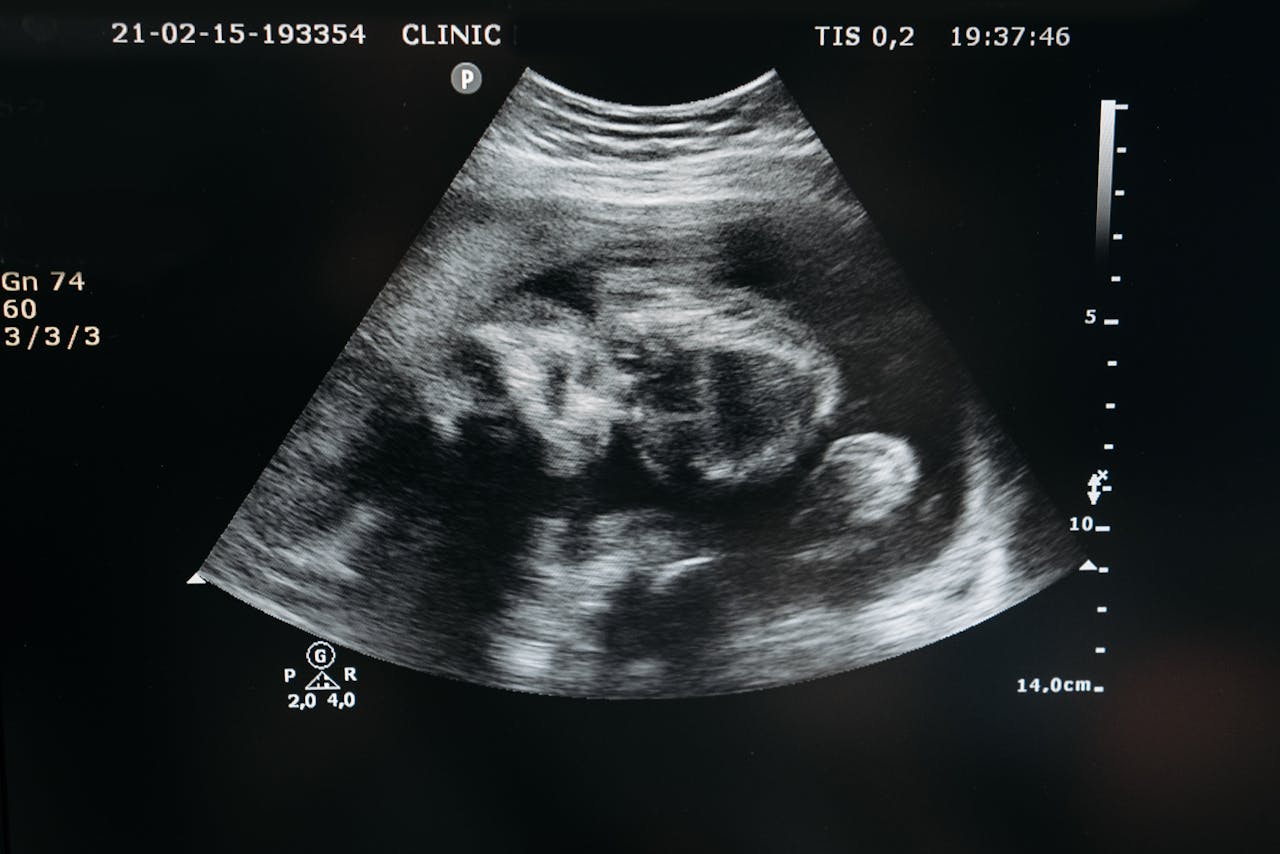
    About 30 percent of the women have some type of pregnancy spotting or bleeding very early in their pregnancies, and about half of these women miscarry. If ultrasound, done between seven to eleven weeks, shows a normal heartbeat, chances of pregnancy surviving is more than 90 percent.

  • Infections - Certain conditions, unrelated to pregnancy, such as:
    • A vaginal infection, such as yeast infection or bacterial vaginosis
    • A sexually transmitted infection, such as trichomoniasis, gonorrhea, chlamydia, or herpes
    . . . can cause spotting due to inflamed or irritated cervix. Bleeding or spotting may also be observed after sex, or a Pap smear, if you have a cervical polyp, which is a benign growth.
  • Problems Of Placenta - Pregnancy spotting or bleeding in the second or the third trimesters of your pregnancy is serious. It could be a sign of a condition known as: placenta previa; placental abruption - the placenta separating from the uterus; a late miscarriage - if between 13 weeks and mid-pregnancy; or premature labor - if between mid-pregnancy and 37 weeks.

    Problems with the placenta could also bring in bleeding during the first trimester of your pregnancy.
  • Normal Labor - If after 37 weeks of pregnancy a mucus discharge tinged with blood is observed, it is a sign that the cervix is preparing for labor, as it has become soft. Still, any spotting or bleeding should be reported to your doctor.

Do not take any kind of vaginal pregnancy spotting during your pregnancy lightly. Report all cases to your doctor, and let him decide. It is always better to be on the safe side of caution.

Google
 
  Pregnancy | Pregnancy | Planning | Symptoms | Tests | Types | Stages | Diet | Exercises | Clothes | Labor | Baby Shower | After Pregnancy | Childcare | Complications
sitemapcontact uspregnancy